3-F

Usage Tools

LAND VEHICLES

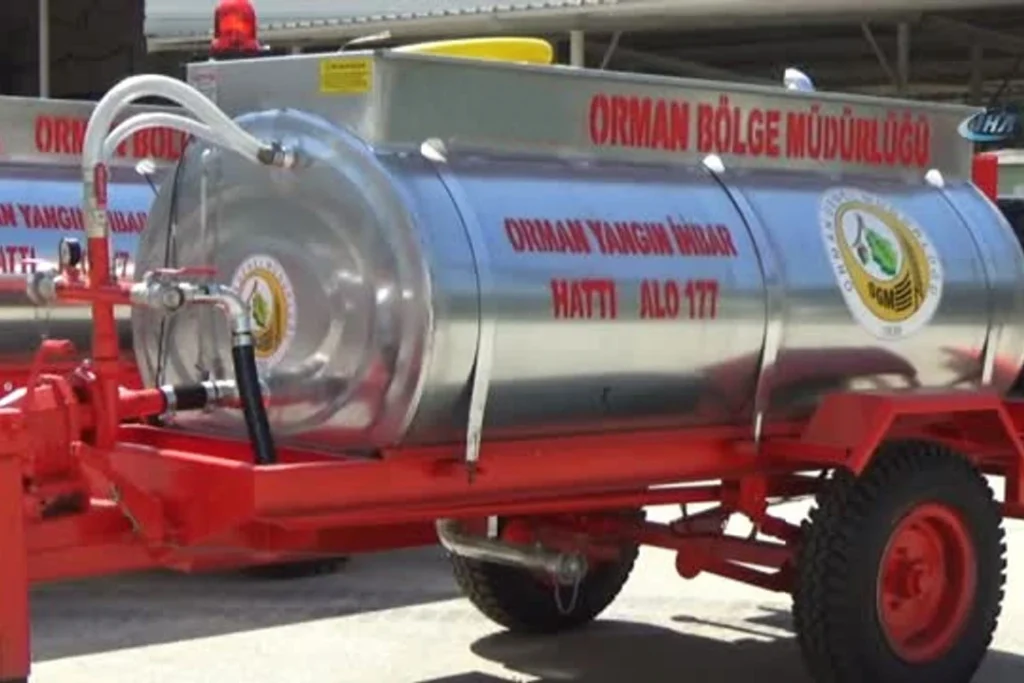
ARAZÖZ

It is the most important vehicle used for land interventions in firefighting operations. Water storage capacity varies. Recommendations and determinations regarding the use of “3-F” in water tenders;

  • The recommended rate for applications for extinguishing and cooling purposes is 3%-6%. The usage rate for applications for creating a barrier is 15%. The rate can be increased according to the difficulty level of the fire. As the rate increases, the product’s effectiveness increases.
  • The use of on-off lance increases efficiency in order to minimize water waste in extinguishing and cooling operations.
  • For maximum effect, spray application at an angle of 30° (approximately) is recommended.
  • It is not irritating to the skin.
  • Since “3-F” applications in firefighting operations provide rapid extinguishing and cooling, there is no need to apply to the same area for minutes. There is no need for additional cooling operations after the application. In firefighting operations using “3-F”, effective extinguishing and cooling is provided in a much shorter time, with less extinguishing product, and in a larger area.
  • It is recommended to wear protective glasses during application. In case of contact with eyes, rinse with plenty of water.
  • It is recommended to rinse the equipment with water after use.

FIRST RESPONSE VEHICLE (IMA)

These vehicles have easier and faster movement capabilities compared to large tonnage vehicles. It provides a great advantage for early intervention against fire. It usually has a water capacity of 300 lt. By adding enough “3-F” extinguishing and cooling product, the extinguishing and cooling performance of at least a 3-ton water truck is achieved. For effective extinguishing and cooling, 2 canisters (2×20 lt.) of product mixture is recommended for each IMA tank.

FIRE EXTINGUISHING TANKER

It is especially preferred in rural areas and villages. It is generally produced with a capacity of 3 tons. In fires that occur in villages and hamlets that are far from settlement centers, there are more casualties. In order to intervene early and effectively in fires that occur in rural areas and especially in forest villages, by providing “3-F” product to each forest village and making the necessary distribution to the mukhtars, great success is achieved in fire fighting operations of forest villages. Adding 300 kg of “3-F” to a 3-ton fire tanker gives an efficiency equivalent to the extinguishing operation performed with 30 tons of water (approximately).

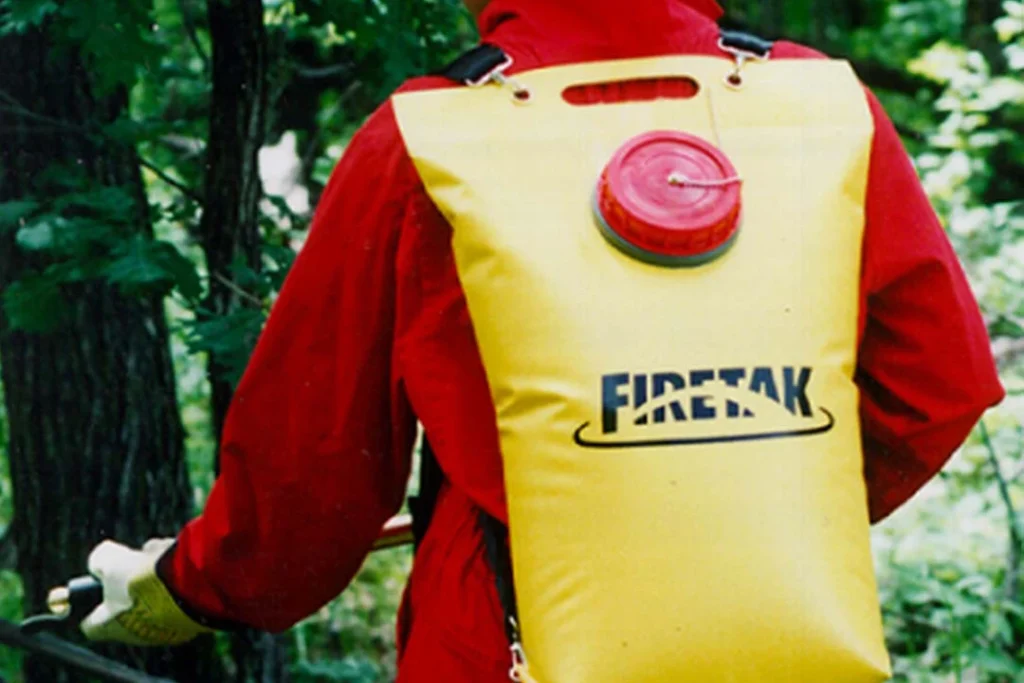
BACK PUMP

In fire extinguishing operations, portable back pumps are preferred for small, point fires that cannot be reached by air and land vehicles, but have the capacity to grow under adverse weather conditions. When “3-F” is added to a 15-25 lt. capacity back pump, the equivalent result is obtained by extinguishing with 150-250 lt. of water. Since there is limited water and product use in this method, the product concentrate can be increased. In these applications, it is recommended to use 1/3 of the product. In firefighting operations performed by adding “3-F” extinguishing and cooling product, the ambient temperature drops below 60 C 30 seconds after the application with the back pump, cooling continues rapidly and no further flare-up occurs. There is no need for a cooling process.

AIRCRAFT

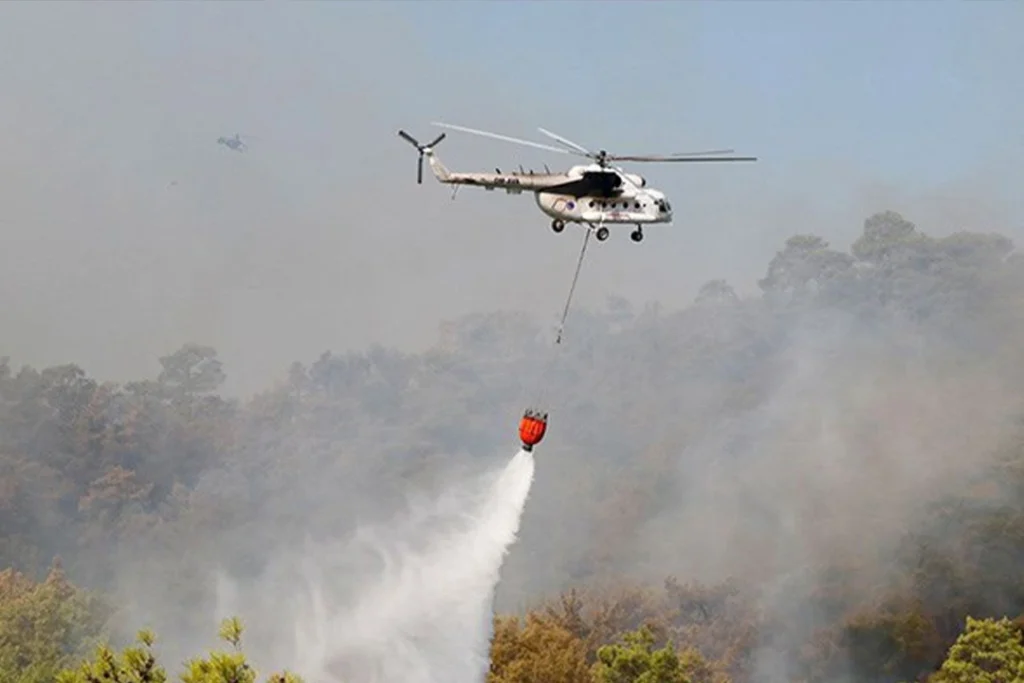
HELICOPTER

Usage recommendations in helicopter applications;
  • A minimum of 3% is recommended in applications where a fire pool is used as a water source.
  • Before the fire season, sufficient quantities of “3-F” product can be stocked in polyethylene tanks in fire-sensitive areas.
  • It is recommended that these warehouses be located in safe areas (wood warehouse affiliated to the business, within the business directorate or regional directorate).
  • It is recommended to have at least 2 outlet valves in the tank. Filling 2 vehicles at the same time during product transfer speeds up the process.
  • It is recommended that there are at least 2 personnel during the application from the fire pool to which the product is added. (The presence of organic waste or excessive algae in the pool may cause surface foaming.)
  • For a homogeneous mixture, the first helicopter should fill the pool, rise 5-10 m in place and empty the water in Bambi back into the pool. This process should be repeated twice and then extinguishing and cooling sorties should be continued.
  • For maximum effect, it is recommended to shoot directly on the flames. There is no need to shoot again at the same place. The fire line is closed in a short time and an effective and definitive result is obtained.
  • In ‘‘3-F’’ applications, very fast extinguishing and simultaneous cooling are provided. Additional water spraying to the same area later does not have a negative effect on the extinguishing and cooling performance of the product.
  • It is not recommended to spray water additionally on the area where the product is applied after applications for the purpose of creating a barrier or retarding the spread of flame.

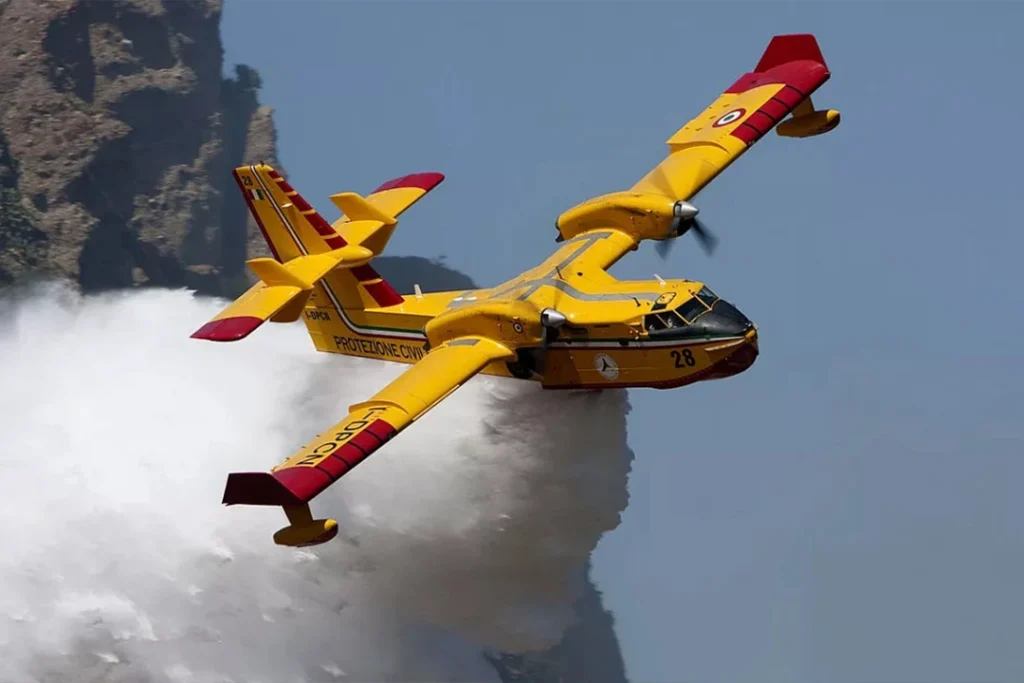
AEROPLANE

Some of the aircraft used in firefighting operations can fill from natural water sources (sea, lake, pond etc.). Others can fill from depots or supply vehicles located at airports. The aircraft operating in this second section generally drop water or retardant products (in order to reduce the fire spreading speed). There is no need for a separate process for the water added with ‘‘3-F’’ from these aircraft. The application procedure for other products is the same for ‘‘3-F’’. Extinguishing and cooling operations performed using the “3-F” product provide definitive results in a very short time.